Quick Answer
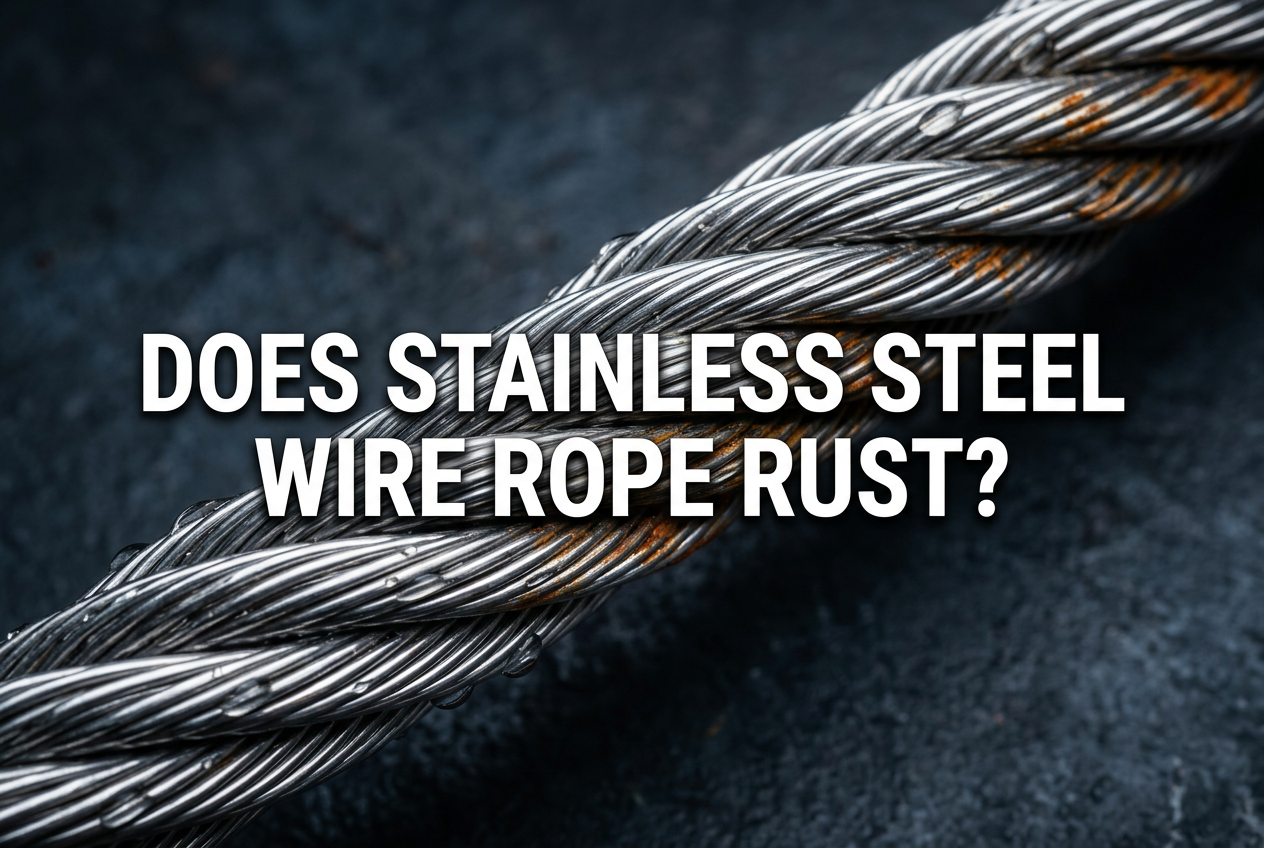
Yes, stainless steel wire rope can rust — but only under specific conditions. The chromium oxide layer that protects stainless steel can break down when exposed to chlorides (salt water, pool chemicals), crevice conditions, or contamination from carbon steel tools. Grade 316 resists rust far better than 304 in marine environments. With correct grade selection and basic maintenance, stainless wire rope stays rust-free for decades.
"Stainless" is a promise most people take literally — so the first brown spot on a stainless steel cable comes as a surprise. The truth is more useful than the marketing: stainless steel does not rust the way carbon steel does, but its protection is an active chemical mechanism, and that mechanism can be defeated. Understanding how it fails tells you exactly how to prevent it.
This guide explains why stainless steel resists rust, the five specific conditions under which stainless wire rope does corrode, how grades 304 and 316 compare, and the practical steps — grade selection, handling, rinsing, and inspection — that keep a rope rust-free for its full service life. It also covers how to remove light surface rust, and how to recognize the point where rust stops being cosmetic and becomes a safety problem.
Why Stainless Steel Resists Rust
Stainless steel resists rust because of its chromium content. Any steel with at least 10.5% chromium reacts instantly with oxygen in air or water to form a passive layer — an invisible film of chromium oxide only a few nanometers thick that seals the iron underneath away from moisture and oxygen. Grade 304 wire rope contains roughly 18% chromium and 8% nickel; grade 316 adds 2–2.5% molybdenum on top of that.
The remarkable property of this layer is that it is self-healing. Scratch a carbon steel surface and the exposed iron starts oxidizing into flaky red rust that never stops growing. Scratch stainless steel and the freshly exposed chromium re-forms the oxide film within seconds — provided oxygen can reach the surface. That is the entire secret of "stainless": not that the steel cannot oxidize, but that it oxidizes into a microscopically thin, stable, self-repairing shield instead of rust.
It also defines the failure conditions. Stainless steel rusts when something either destroys the passive layer faster than it can rebuild — chlorides are the classic culprit — or starves it of the oxygen it needs to rebuild at all, which is what happens inside tight crevices. Every real-world rust case on stainless wire rope traces back to one of those two mechanisms, or to foreign carbon steel rusting on the surface.
When Stainless Steel Wire Rope DOES Rust
Five conditions account for nearly every case of rust on stainless steel wire rope. Most installations that develop rust are experiencing two or three of them at once — a 304 rope (grade), near the coast (chlorides), with swaged fittings (crevices) is the textbook example.
1. Chloride Exposure
Chloride ions are the passive layer's natural enemy: they penetrate and locally dissolve the chromium oxide film, opening microscopic pits that the film cannot re-seal while chlorides remain. The common sources are salt water and sea spray (marine and coastal installations), pool chemicals (chlorine and, worse, the chloramine vapor that concentrates in indoor pool halls), and road de-icing salt splashed onto barriers and infrastructure cable. Pitting from chlorides is the most damaging rust mechanism because it drills narrow, deep holes rather than spreading across the surface — a rope can lose significant wire cross-section while still looking mostly clean. This is precisely the environment where grade 316's molybdenum earns its cost, as our guide to stainless steel wire rope in marine applications explains in detail.
2. Crevice Corrosion
Crevice corrosion is the rust mechanism most specific to wire rope, because a wire rope is — geometrically — a bundle of crevices. The gaps between individual wires, the valleys between strands, and above all the interior of swaged ferrules, sleeves, and thimble eyes all trap moisture in stagnant pockets. Inside a tight crevice, the trapped water quickly runs out of dissolved oxygen, the passive layer cannot regenerate, and chlorides and acidity concentrate. The result is corrosion that starts inside the rope or fitting and is invisible from the outside until rust stains weep from the mouth of a fitting or from between strands. This is why terminations deserve the closest attention in any inspection, and why rust bleeding from a swage is treated as a serious finding rather than a cosmetic one.
3. Contamination / Cross-Contamination
Sometimes the rust you see on stainless steel is not the stainless steel rusting. When a stainless rope is cut with a disc that previously cut carbon steel, handled with carbon steel pliers, dragged across a steel workbench, or installed near grinding or welding work, tiny particles of free iron embed in its surface. Those particles rust within days, producing orange-brown spots that look exactly like the rope itself failing. Left in place, the rusting particle can locally break down the passive layer beneath it and seed genuine pitting. The fix is procedural: dedicated tools and cutting discs for stainless work, storage away from carbon steel dust and grinding sparks, and prompt removal of any spots that appear after installation.
4. Tea Staining
Tea staining is the light brown, coffee-colored discoloration that appears on 304 stainless steel within a few kilometers of the coast — common on architectural cable, balustrades, and railing wire that faces sea air but is rarely rained on. It is a surface phenomenon: a mild, shallow form of chloride attack that discolors the metal without initially reducing its strength. The distinction matters — tea staining is an appearance problem, not (yet) a structural one — but it should be read as a warning label: the environment is aggressive enough to defeat the passive layer, and untreated staining on 304 can progress to genuine pitting over the years. The standard responses are upgrading to 316, washing the staining off before it establishes, or both.
5. High Temperature & Chemical Exposure
Two less common but real mechanisms round out the list. Prolonged exposure to temperatures of roughly 450–850°C — welding heat, fire, some industrial processes — causes sensitization: chromium binds with carbon at the grain boundaries, locally depleting the chromium available to form the passive layer and leaving the steel vulnerable to corrosion along those boundaries. The rainbow-colored heat tint next to a weld marks exactly such a depleted zone. Separately, strong reducing acids (hydrochloric/muriatic acid is the everyday example), aggressive chloride bleaches, and some industrial process chemicals attack the passive film directly — which is why chloride-based cleaners should never be used on stainless rope, and why chemical-plant applications need a corrosion review before specifying any stainless grade.
304 vs 316: Rust Resistance Compared
Grades 304 and 316 are the two stainless steels used for virtually all stainless wire rope, and the difference between them is almost entirely about rust. 316 contains 2–2.5% molybdenum, which stabilizes the passive layer against exactly the chloride attack described above. In dry indoor service the two grades perform identically; the further you move toward salt, chlorine, and permanent outdoor exposure, the more the gap opens.
| Environment | Grade 304 | Grade 316 |
|---|---|---|
| Indoor, dry | Excellent — no rust expected | Excellent (no benefit over 304) |
| Outdoor, inland | Very good with occasional cleaning | Excellent |
| Coastal (within ~5 km of surf) | Tea staining likely; pitting possible | Very good — the standard choice |
| Marine / immersed / sea spray | Not recommended — will pit | Good with fresh-water rinsing |
| Pools & spas (chloramine vapor) | Not recommended | Required minimum; inspect regularly |
The practical rule: specify 316 whenever the rope will live near salt water, pool chemistry, or de-icing salt, or wherever appearance matters and cleaning will be infrequent. The price premium is typically 20–30%, which is small against the cost of replacing a pitted architectural installation. For the full metallurgical comparison — strength, magnetic properties, temperature behavior, and cost — see our complete guide to 304 vs 316 stainless steel wire rope.
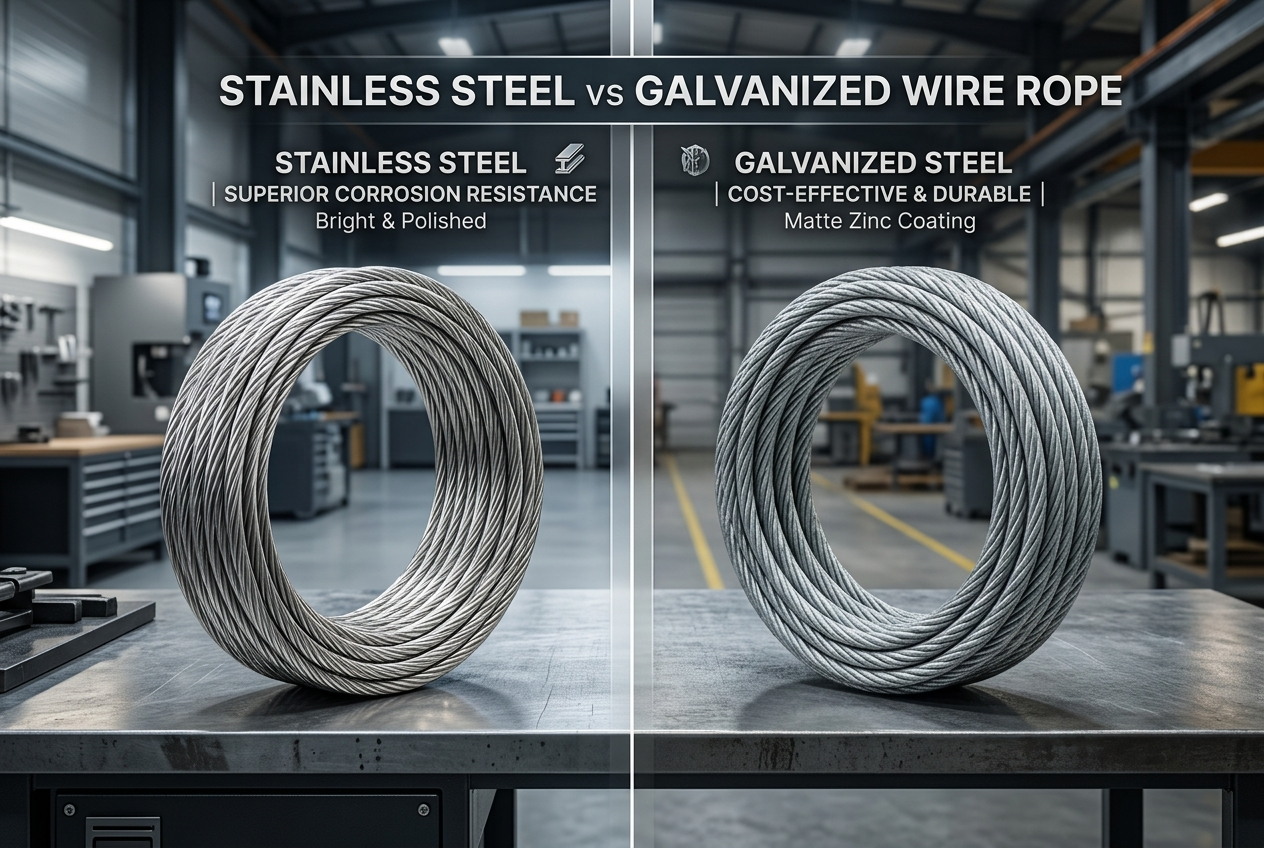
Stainless vs Galvanized: Which Rusts First?
Galvanized wire rope protects itself in a fundamentally different way: a sacrificial zinc coating corrodes instead of the steel beneath. That protection is consumable — once the zinc layer is spent (first as white zinc oxide bloom, then as red rust breaking through), the carbon steel core rusts rapidly and nothing renews the protection. Stainless steel's passive layer, by contrast, rebuilds itself indefinitely as long as the environment allows.
In practice: in a dry indoor application, galvanized rope may stay rust-free for decades and is the economical choice. Outdoors in a marine or coastal environment, galvanized rope typically shows red rust within months to a few years, while 316 stainless lasts for decades in the same exposure. Stainless also survives abrasion better — scratches heal, whereas every scratch in a zinc coating is a permanent breach. The full cost-and-lifespan comparison is in our guide to stainless steel vs galvanized wire rope.
How to Prevent Rust on Stainless Wire Rope
Rust prevention for stainless wire rope is inexpensive and mostly front-loaded: pick the right material, keep it clean, and check the hidden spots. Five measures cover nearly everything:
- 1. Select the right grade for the environment. Specify 316 for marine, coastal, poolside, and road-salt exposure; 304 is fine for dry indoor and mild inland outdoor service. Getting this one decision right prevents most rust cases before they start — our guide on how to choose stainless steel wire rope walks through grade, construction, and diameter selection step by step.
- 2. Avoid carbon steel contact. Use dedicated stainless-only cutting discs, brushes, and tools; never clean stainless with steel wool or a carbon steel wire brush; store and install rope away from grinding sparks and steel swarf. Cross-contamination is the most preventable rust cause on this list.
- 3. Rinse with fresh water regularly. Chlorides only attack while they sit on the surface. A fresh-water rinse every few weeks — or simply exposure to rain — washes salt off before it can establish pitting. Pay special attention to sheltered runs that rain never reaches: under eaves, beneath decks, and inside pool enclosures, which is where coastal tea staining always appears first.
- 4. Inspect terminations and crevices. Check swage fittings, thimble eyes, and strand valleys — the crevice zones — at least annually, and look specifically for rust stains weeping from the mouth of fittings. Ensure water can drain from fittings rather than pooling inside them.
- 5. Treat surface rust spots promptly. A contamination spot or early tea stain removed this month is a five-minute job; the same spot left for two years can seed pitting that no cleaning will reverse. The removal methods below handle anything caught early.
How to Remove Surface Rust
Light surface rust and tea staining on stainless wire rope are removable, provided the attack has not progressed to pitting. Work through the methods in order of aggressiveness:
- Nylon brush and neutral detergent. For light stains and fresh contamination spots: scrub with a nylon brush or non-metallic scouring pad and warm water with a neutral (pH-balanced) detergent, working along the lay of the strands. Rinse thoroughly with fresh water and let the rope dry in air — drying re-oxygenates the surface and lets the passive layer rebuild. Never use steel wool or a carbon steel brush, which trade one rust problem for another.
- Passivation paste or citric/phosphoric acid cleaner. For established tea staining or stubborn spots: apply a commercial stainless steel pickling/passivation paste or an acid-based stainless cleaner (citric or phosphoric — never hydrochloric/muriatic acid, which is a chloride attack in a bottle). These dissolve the rust and embedded free iron, then let a fresh passive layer form. Follow the product's contact time exactly and rinse completely, including out of the strand valleys.
- Know when cleaning is the wrong answer. If you can feel pits with a fingernail, if rust is weeping from inside a fitting or from between strands, or if any wires are broken, the rope's cross-section is already compromised — cleaning will only improve its appearance, not its strength. Replace the assembly instead.
When Rust Means Replacement
Surface staining is cosmetic; corrosion that has consumed metal is structural. As a rule of thumb from destructive testing, a 10% loss of metallic cross-section costs roughly 15% of a rope's breaking strength — and pitting is worse than uniform wear because each pit concentrates stress and seeds fatigue cracks. Replace a stainless wire rope, regardless of how new it is, when you find any of the following:
- Pitting you can feel — measurable craters rather than surface discoloration.
- Rust weeping from crevices — stains emerging from swage fittings, thimble contact points, or between strands, indicating hidden internal corrosion.
- Broken wires, especially at or near terminations — corrosion-driven wire breaks cluster where crevice attack is strongest.
- Diameter reduction of more than about 7% from nominal, from any combination of wear and corrosion.
- Heat damage — discoloration or heat tint from welding or fire near the rope.
These criteria come from the same discard standards (ISO 4309, ASME B30.9) used for every wire rope inspection — the full 12-point procedure is in our wire rope inspection checklist. For safety-critical applications where you need to verify remaining strength rather than estimate it, our guide to wire rope testing methods and standards covers destructive break tests and the non-destructive methods that can detect internal corrosion before it becomes visible.
Frequently Asked Questions
Does stainless steel wire rope rust in salt water?
It can. Chloride ions in salt water attack the protective chromium oxide layer and cause pitting. Grade 304 will show tea staining and eventually pit in marine environments, while grade 316 — with 2–2.5% molybdenum — resists salt water well and is the standard for marine rigging, lifelines, and coastal installations. Even 316 benefits from periodic fresh-water rinsing in heavy salt-spray zones.
How long does stainless steel wire rope last?
Correctly specified and maintained, stainless steel wire rope lasts 20–30+ years in static applications like railings and architectural cable. Lifespan depends on matching grade to environment: 316 in marine service routinely lasts decades, while 304 in the same exposure may pit within a few years. Dynamic applications (winches, pulleys) are usually retired for fatigue and wear long before corrosion becomes the limiting factor.
What is tea staining on stainless steel?
Tea staining is a light brown surface discoloration that appears on stainless steel — most often grade 304 — in coastal areas, caused by mild chloride attack on the passive layer. It is a cosmetic issue rather than a structural one, but it signals an aggressive environment: left untreated it can progress to genuine pitting. It is removed with acid-based stainless cleaners and prevented by specifying 316 and rinsing salt off regularly.
Why is my stainless steel wire rope rusting?
The most common causes are: the grade is too low for the environment (304 in coastal or poolside service), carbon steel contamination from tools, cutting discs, or nearby grinding, or crevice corrosion inside fittings and between strands. Isolated orange spots on an otherwise clean rope usually indicate contamination; staining concentrated at fittings indicates crevice attack; general browning near the coast is tea staining.
Is 316 stainless steel wire rope completely rustproof?
No — 316 is highly rust-resistant, not rustproof. It withstands salt spray, pool environments, and coastal air far better than 304, but it can still pit under permanent immersion in stagnant seawater, inside oxygen-starved crevices, or in heavily chlorinated water without maintenance. For 316, prevention means rinsing off salt deposits and inspecting terminations — the two places where even the best grade can be defeated.
How do I remove rust from stainless steel wire rope?
Scrub light stains with a nylon brush and neutral detergent, rinse with fresh water, and air dry. For established stains, use a citric or phosphoric acid stainless cleaner or passivation paste, then rinse thoroughly. Never use steel wool, carbon steel brushes, or chloride-based cleaners like bleach or muriatic acid. If the rope shows pitting, broken wires, or rust weeping from fittings, replace it — cleaning restores appearance, not strength.
Specify a Rope That Stays Stainless
Nearly every rusted stainless rope we are asked to diagnose comes down to one early decision: the grade didn't match the environment. Tell us where the rope will live — coastal, poolside, offshore, industrial — and our engineering team will confirm the right grade, construction, and termination for a rust-free service life, with material certificates and salt-spray-tested 316 available on every production lot. Contact us for technical support — we typically respond within 2 hours during business hours.